
Engineering conglomerate Larsen & Toubro (L&T) is preparing the ground to begin the commercial sale of electrolysers in September, which would be 50 per cent cheaper than its European counterparts, a senior company executive has said. An electrolyser is a key equipment required for the generation of green hydrogen. Last quarter, L&T manufactured its first electrolyser as a prototype.

Capital expenditure by Indian companies is likely to see an uptick in the upcoming quarters as capacity utilisation has surpassed the critical threshold of 75 per cent, and numerous companies have deleveraged their balance sheets, according to analysts. The first quarter of the current financial year has shown improved profitability, driven by a decrease in input prices. This, according to analysts at Care Ratings, should stimulate a revival in the private capex cycle.

The finance ministry expects a broad-based moderation in inflationary pressures on the back of an anticipated reduction in food prices as a result of the uptick in summer sowing. The retail inflation rate remained stubbornly clung to the 5 per cent mark in seven of the past eight months. "Core inflation is trending downwards, indicating a broad-based moderation in price pressures... Driven by strong domestic growth and benign global commodity prices, core inflation is declining continuously.

Latest GDP growth numbers a one-off development and not the beginning of a trend, says CEA V Anantha Nageswaran.

India and the US have decided to hold sector-specific talks in the coming weeks to finalise the structure of the proposed bilateral trade agreement (BTA), the government said on Saturday. The engagement between the two countries came in the backdrop of the USA's threat to impose reciprocal tariffs on its key trading partners, including India, on April 2.

Indonesia, the world's biggest supplier of palm oil, said on Thursday it will lift a ban on exports from Monday, likely helping India and other importers. India annually imports around 13-13.5 million tonne of edible oils, of which around 8-8.5 million tonnes (around 63 per cent) is palm oil. Of this, 8-8.5 million tonnes of palm oil, 45-50 per cent comes from Indonesia and the rest from neighboring Malaysia.

Corporate margins and profits in India remain vulnerable to changes in crude oil prices in the international market. Historical quarterly data from listed companies (excluding banks, finance and insurance, oil and gas, and power sectors) indicate an adverse correlation between corporate margins and crude oil prices.

The October-December quarter (Q3FY25) results of fast moving consumer goods (FMCG) major Hindustan Unilever (HUL) indicated weak demand, with urban growth muted and rural showing recovery. Consolidated revenue grew by 1.6 per cent (volume was flat) to Rs 15,818 crore, due to price hikes. Prices of key raw materials such as palm oil and tea remained elevated, leading to compression of gross margin.

A year after a Hamas attack against Israel on October 7 and the ensuing Israeli invasion of the Gaza Strip, India's trade with most West Asian countries has largely escaped any major disruption, except with countries like Israel, Lebanon, and Jordan. However, repeated flare-ups of geopolitical tensions in the region continue to drive up shipping and logistics costs.
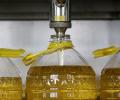
The government has reduced the tariff value for import of edible oil, including palm oil, by up to $112 per tonne, a move which experts said can lead to lower domestic prices. The Central Board of Indirect Taxes and Customs (CBIC), through a notification, has cut the tariff import value of crude palm oil by $86 per tonne, and of RBD and crude palmolein by $112 per tonne each. It also reduced the base import price of crude soyabean oil by $37 per tonne. The changes in tariff value of edible oil are effective from Thursday (June 17).

Domestic rating agency Icra on Monday revised its FY24 GDP growth forecast to 6.5 per cent from 6.2 per cent earlier. However, the revised forecast is still much lower than the Reserve Bank of India's (RBI's) 7 per cent real Gross Domestic Product (GDP) growth estimate for the ongoing fiscal. Earlier this month, the RBI had revised upwards its GDP estimate to 7 per cent from 6.5 per cent, calling the revised number a "conservative" one.

India's production of crude oil, which is refined to produce petrol and diesel, continued to decline in November, with lower output from state-owned firms leading to an over 2 per cent drop, official data released on Tuesday showed. Crude oil production in November was 2.43 million tonnes, down from 2.48 million tonnes a year back and 2.5 million tonnes in October 2021. Oil and Natural Gas Corporation (ONGC) produced 3 per cent less crude oil at 1.6 million tonnes in November due to delays in mobilising equipment at western offshore fields.
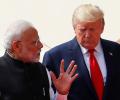
'While criticising India's high tariffs, Mr Trump stated he would impose reciprocal taxes on Indian products if re-elected.' 'However, since India's tariffs follow WTO rules, Mr Trump's actions would violate these rules,' Ajay Srivastava points out.

Prime Minister Narendra Modi and US Vice President JD Vance have expressed satisfaction with the progress made in negotiations for a bilateral trade agreement. The two leaders met in New Delhi and discussed a range of bilateral issues, including cooperation in energy, defense, strategic technologies, and other areas. They also exchanged views on regional and global issues of mutual interest.

'The coronavirus epidemic highlights the need to start thinking more actively about multilateral coordination, including, but not confined to, health emergencies and climate uncertainties,' says Rathin Roy.

Supply chain constraints will keep plaguing automobile companies even though demand significantly improved resulting in a 13 per cent year-on-year (YoY) increase in sales in financial year 2021-22 (FY22). Executives at auto firms fear that the Russia-Ukraine war will further dent the sector's prospects of recovery as supply chains face more disruptions. "The visibility in the supply side is so hazy that it is difficult to give even one quarter projection. But all the parameters of demand like pending bookings and enquiries are increasing.

'Expect India to keep doing well irrespective of geopolitics.'

Reliance Industries Ltd, India's most valuable company, is back on a growth path after six months of challenges as it posted better than expected earnings in the December quarter, brokerages said.

India's merchandise exports rose by 9.1 per cent to $38.13 billion in May even as the trade deficit widened to a seven-month high of $23.78 billion during the month, according to government data. Healthy growth in sectors, such as engineering, electronics, pharmaceuticals, textiles and plastics helped register growth in exports despite global economic uncertainties.

Indian Oil Corporation (IOC), the nation's largest oil firm, has renewed a deal to buy up to 2 million tonnes of crude oil in 2022 from Russia's Rosneft, the Russian oil producer said. IOC had in February 2020 signed a deal with Rosneft Oil Company to import up to 2 million tonnes of oil via the port of Novorossiysk. In 2021, the deal envisaged supply of up to 1.7 million tonnes of crude oil but IOC bought just on parcel or shipload as the cost of transporting the oil made it uneconomical, when compared to alternatives. For 2022, the deal is for the supply of up to 2 million tonnes of oil from the Black Sea port of Novorossiysk.

Global rating agency Moody's on Monday said the high commodity prices and supply chain disruptions due to further escalation in the Russia-Ukraine crisis could expose about 42 per cent of rated Indian companies to significant risks. They are mainly in the oil and gas and automotive sectors. The impact may be seen under two scenarios: first, revised base line and second being downside economic scenarios incorporating a global recession and a more severe liquidity squeeze, it said. The military conflict between Russia and Ukraine is impacting companies in Asia Pacific, adding to existing challenges from supply chain disruption and the coronavirus pandemic.

The Reserve Bank of India (RBI) has identified "climate shocks" as a risk to food inflation rates and overall price rise while stating that the outlook for the country's economic growth remains bright. In its Annual Report for 2023-24, released on Thursday, the central bank said easing supply-chain pressures, broad-based softening in core inflation, and early indications of an above-normal southwest monsoon meant well for the inflation outlook in 2024-25. "The increasing incidence of climate shocks, however, imparts considerable uncertainty to the food inflation and overall inflation outlook," said the RBI while noting headline inflation moderated by 1.3 percentage points on an annual average basis to 5.4 per cent in 2023-24.

N Chandrasekaran, chairman of Tata Consultancy Services (TCS) and Tata Sons, believes that the Digital India Act is a necessity. "The Digital India Act is a necessity because so much has changed over the decades since the original Information Technology (IT) Act was put in place. I am glad the government is developing a participative approach to developing the Digital Act," he said, while answering shareholders at TCS' 27th annual general meeting. Minister of State for Electronics and IT Rajeev Chandrasekhar a few months ago had said that the government would shortly roll out the Digital India Act - a renewed policy for the digital ecosystem and cyberspace in the country.

Prime Minister Narendra Modi on Tuesday underlined the need for not promoting any restrictions on the supply of energy and called for ensuring stability while once again emphasising on resolving the Ukraine conflict through diplomacy.

There is immense pressure on Biyani to go ahead with the RIL offer after FRL defaulted on its interest payments of Rs 100 crore on July 22.

The rupee tumbled 3 per cent against the US dollar in 2024 as concerns over slower economic growth and a stronger greenback in global markets weighed, but it was among the least volatile currencies in the world and the headwinds may be less intense in the coming year.

With Donald Trump all set to become US president, Indian exporters may face high customs duties for goods like automobiles, textiles and pharmaceuticals if the new US administration decides to pursue the 'America First' agenda, opined trade experts. Experts also said that Trump could also tighten H-1B visa rules, impacting costs and growth for Indian IT firms. Over 80 per cent of India's IT export earnings come from the US, making it vulnerable to changes in visa policies.

Retail inflation declined to a five-month low of 4.85 per cent in March mainly due to cooling food prices, inching towards the Reserve Bank's target of 4 per cent, according to official data released on Friday. The Consumer Price Index (CPI) based retail inflation was 5.09 per cent in February and 5.66 per cent in March 2023. Previously, CPI-based inflation was the lowest at 4.87 per cent in October 2023.

'Our target will come from rural areas as there are more outlets there.'

New investment projects announced in the manufacturing sector declined in the three months ended June 2023. The value of new projects was lower than in the March quarter, as well as the year-ago period, shows data from project tracker the Centre for Monitoring Indian Economy (CMIE). The new project announcements worth around Rs 85,000 crore in the manufacturing segment in June were a 48 per cent decline from the Rs 1.6 trillion in March and a 66 per cent decline from the Rs 2.5 trillion seen in June 2022.

India's total purchase of oil from Russia in a month is probably less than what Europe does in an afternoon, External Affairs Minister S Jaishankar said.
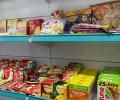
'In staples, we have still managed in rural areas.'

'The government has put in a lot of effort to provide infrastructure for the industry.'

Besides growing tech and digital enhancements, the firms are ramping up the hiring of more delivery partners and reinforcing existing Covid protocols.

'The fact still remains that we will have to deliver, so the pressure is now on us to make sure we get our resources, our supplies lined up at acceptable costs.'
'The government has put in a lot of effort to provide infrastructure for the industry.'

The Russian-Ukraine war can hit the global supply chains that are already constrained due to the pandemic and the worst impact will be on ongoing chip shortage because the warring nations brutally control supplies of key raw materials that go into making semiconductors, warns a report. Since Russia controls as much as 44 per cent of global palladium suppplies, Ukraine produces a significant 70 per cent of the global supply of neon -- the two key raw materials that go into making chips. The markets can expect the global chip shortage, that began with the pandemic, to worsen if the military conflict lingers on, says a Moody's Analytics report on Friday.

Future Group and V-Mart have put in place systems to prevent panic buying at their neighbourhood grocery stores.

'If attacks escalate, there is a risk the Suez Canal may be closed.'

India has been ranked a low 119 out of 130 countries on an index that measures business resilience.
